
Poojas, Regular poojas
Narayan Nag Bali Pooja
Original price was: ₹20,000.00.₹11,000.00Current price is: ₹11,000.00.
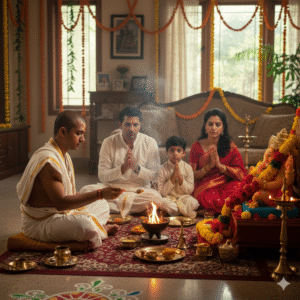
Narayan Nag Bali Pooja is a sacred Hindu ritual performed primarily to remove ancestral curses and negative influences. The pooja is especially significant for those seeking to release the souls of their ancestors from bondage and to offer them peace. It is traditionally performed in places like the Trimbakeshwar Temple in Maharashtra and Gaya in Bihar.
Long Description (Point-wise):
-
Purpose:
-
To seek liberation (moksha) for ancestors’ souls.
-
To remove ancestral curses and negative energies.
-
To seek peace and prosperity for the family.
-
-
Who Should Perform:
-
Individuals experiencing recurring problems due to ancestral curses or spirits.
-
People who wish to seek blessings for the well-being of their family.
-
Those facing obstacles related to health, finances, or relationships.
-
-
Ritual Process:
-
Step 1: Preparation of sacred offerings like fruits, flowers, and grains.
-
Step 2: The priest performs prayers and chants the mantras of Narayan and Nag.
-
Step 3: The symbolic offering (bali) of the Nag and Narayan figures is made into the holy fire.
-
Step 4: Pooja is performed with the chanting of Vedic mantras and hymns.
-
Step 5: Ancestors are remembered, and the ritual concludes with blessings for the family.
-
-
Duration:
-
Typically takes 3 to 5 hours, depending on the temple and number of participants.
-
-
Benefits:
-
Removes obstacles in personal and professional life.
-
Provides relief from debts, health issues, and misfortune.
-
Grants peace and prosperity by pleasing ancestors.
-
-
Location:
-
Can be performed at home under the guidance of a priest or at specific temples like Trimbakeshwar and Gaya.
-
-
Materials Needed:
-
Pooja Samagri (Offerings)
-
Narayan and Nag idols or representations
-
Holy water and sacred fire for rituals
-
Table Format:
| Step | Action | Details |
|---|---|---|
| 1 | Preparation | Gather sacred offerings like fruits, flowers, and grains. |
| 2 | Chanting & Prayers | Priest chants mantras and prays to Narayan and Nag. |
| 3 | Offering Bali | Symbolic offering of Nag and Narayan figures in holy fire. |
| 4 | Mantras & Hymns | Recitation of Vedic mantras during the pooja. |
| 5 | Blessings & Closure | Ancestors are remembered and blessings for the family are invoked. |
Related products
-
PoojasQuick View
Ganesh Puja – Invoke Lord Ganesha’s Blessings for Success and Obstacle Removal
Original price was: ₹7,000.00.₹4,001.00Current price is: ₹4,001.00. Select Options -
PoojasQuick View
Vaidik Vivah Sohala – Traditional Hindu Wedding Ceremony as per Vedic Rituals
Original price was: ₹16,999.00.₹11,001.00Current price is: ₹11,001.00. Select Options -
PoojasQuick View
Shri Satyanarayan Mahapuja – Seek Lord Vishnu’s Blessings for Prosperity & Peace
Original price was: ₹7,000.00.₹4,501.00Current price is: ₹4,501.00. Select Options